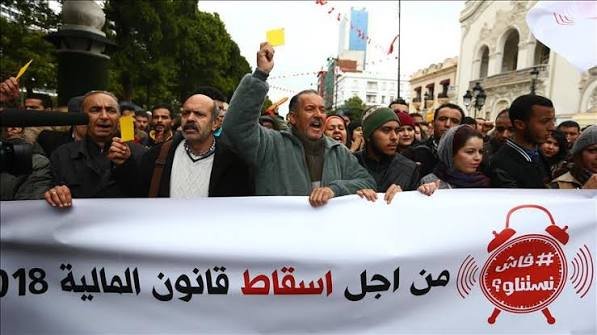
Protests against austerity measures spread across Tunisia in early January 2018 after a new finance law brought tax and price increases at the start of the year.
Demonstrations were reported in Tunis and at least a dozen other towns, including Sousse and Hammamet. Many participants linked the measures to persistent unemployment, rising living costs and economic reforms associated with international lending commitments. Some gatherings were peaceful, while others involved clashes, property damage and looting.
Authorities deployed police and made hundreds of arrests. By 15 January, the Interior Ministry said roughly 850 people had been detained. The United Nations and human-rights organisations urged officials to distinguish violent offences from peaceful protest and to avoid arbitrary detention.
The unrest arrived around the seventh anniversary of the departure of former president Zine El Abidine Ben Ali. Tunisia was widely regarded as the strongest democratic outcome of the Arab uprisings, yet the protests demonstrated that political freedoms had not resolved deep economic grievances. Human Rights Watch later documented allegations of beatings and denial of access to lawyers during arrests, adding a civil-liberties dimension to the economic confrontation.
Sources

Zeynep Aziz is a social-affairs specialist, writer and advocate with advanced academic qualifications in both Social Sciences and International Relations. Her multidisciplinary education has given her a strong understanding of society, public policy, human rights and the political forces shaping Turkey’s domestic and international development.
For many years, Zeynep has been actively engaged in social affairs and initiatives supporting the rights and well-being of Turkish citizens. Her work pays particular attention to social equality, democratic participation and the protection of vulnerable and disadvantaged communities.
Women’s rights remain central to her interests and advocacy. She works to raise awareness of the challenges faced by women in Turkey, including discrimination, violence, unequal opportunities and barriers to full participation in political, professional and social life. She strongly supports women’s empowerment, equal access to education and employment, and effective legal protection for women and girls.
Alongside her social work, Zeynep closely follows Turkey’s international relations and foreign policy. She takes a keen interest in Turkey’s relations with Europe, neighbouring countries and international institutions, as well as the impact of regional and global developments on Turkish society.
Through her writing and public engagement, Zeynep seeks to encourage informed discussion, strengthen respect for human rights and contribute to a fairer, more democratic and inclusive Turkey.

 Zeynep Aziz