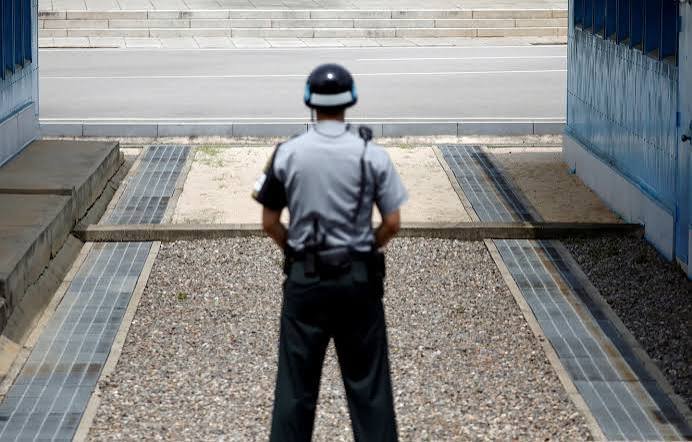
North and South Korea reopened a direct border hotline on 3 January 2018, restoring official communication after nearly two years of silence.
The contact followed North Korean leader Kim Jong Un’s New Year message expressing interest in sending a delegation to the Winter Olympics in Pyeongchang, South Korea. Seoul proposed high-level talks, and liaison officers spoke through the Panmunjom channel.
The reopening did not resolve the confrontation over North Korea’s nuclear and missile programmes, but it created a practical route for dialogue during a period of exceptionally high tension. The United States maintained its pressure campaign while cautiously welcoming the possibility that Olympic diplomacy could reduce immediate risks.
Within days, the two sides held their first formal talks in more than two years. North Korea agreed to participate in the Games, and further discussions led to joint ceremonial appearances and a unified women’s ice-hockey team. The January hotline therefore became the first concrete step in a broader diplomatic thaw that produced inter-Korean summits later in 2018, even as disagreements over denuclearisation persisted.
Sources

Zeynep Aziz is a social-affairs specialist, writer and advocate with advanced academic qualifications in both Social Sciences and International Relations. Her multidisciplinary education has given her a strong understanding of society, public policy, human rights and the political forces shaping Turkey’s domestic and international development.
For many years, Zeynep has been actively engaged in social affairs and initiatives supporting the rights and well-being of Turkish citizens. Her work pays particular attention to social equality, democratic participation and the protection of vulnerable and disadvantaged communities.
Women’s rights remain central to her interests and advocacy. She works to raise awareness of the challenges faced by women in Turkey, including discrimination, violence, unequal opportunities and barriers to full participation in political, professional and social life. She strongly supports women’s empowerment, equal access to education and employment, and effective legal protection for women and girls.
Alongside her social work, Zeynep closely follows Turkey’s international relations and foreign policy. She takes a keen interest in Turkey’s relations with Europe, neighbouring countries and international institutions, as well as the impact of regional and global developments on Turkish society.
Through her writing and public engagement, Zeynep seeks to encourage informed discussion, strengthen respect for human rights and contribute to a fairer, more democratic and inclusive Turkey.
 Zeynep Aziz