
 Zeynep Aziz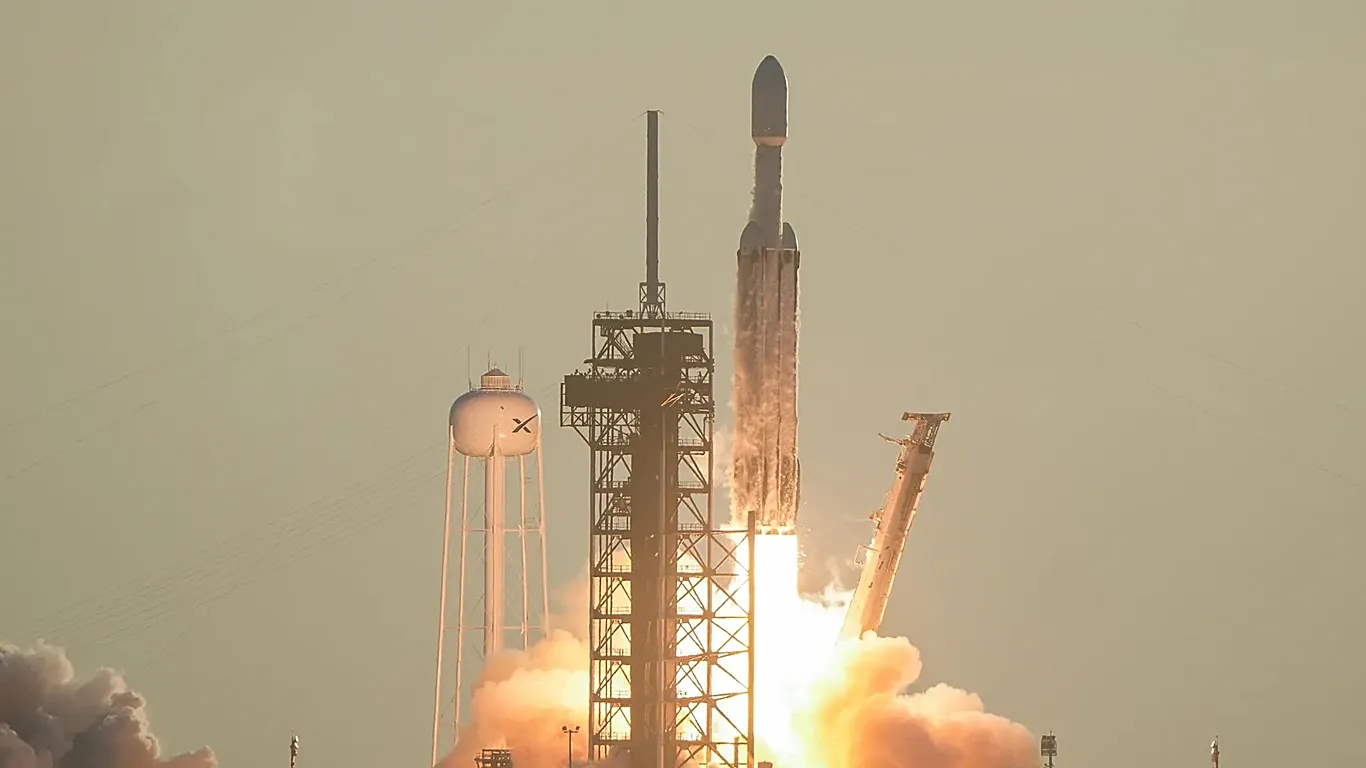
NASA’s Nancy Grace Roman Space Telescope lifted off on August 30 from the Kennedy Space Center, opening a scientific mission dedicated to understanding the expansion of the Universe, dark matter, and the search for exoplanets.
An Exceptional Field of View
Roman is designed to produce images covering portions of the sky far wider than those observed by Hubble, while maintaining a high level of detail. This combination will allow it to map hundreds of millions of galaxies and track the evolution of large-scale cosmic structures.
Scientists hope to better understand dark energy, the name given to the phenomenon associated with the acceleration of the Universe’s expansion. The observations will also contribute to measuring the distribution of dark matter through its gravitational effects.
Thousands of Exoplanets
Part of the mission will use gravitational microlensing: when a celestial body passes in front of a distant star, its gravity temporarily amplifies the light received. This technique can reveal planets that are difficult to detect by other methods.
Commissioning and Complementarity with Hubble and Webb
After launch, teams must conduct a commissioning and calibration phase before the start of the major surveys. Roman will work in complement to Hubble and the James Webb Space Telescope, with a more panoramic vocation — sweeping across wide areas of the sky rather than focusing on narrow, deep fields.
References
NASA – Roman mission: https://science.nasa.gov/mission/roman-space-telescope/
NASA Goddard – Nancy Grace Roman Space Telescope: https://roman.gsfc.nasa.gov/


 Mehmut Naser